

Stop Telling Me to Look on the Bright Side
I Knew They Were Right. I Was Still Furious.

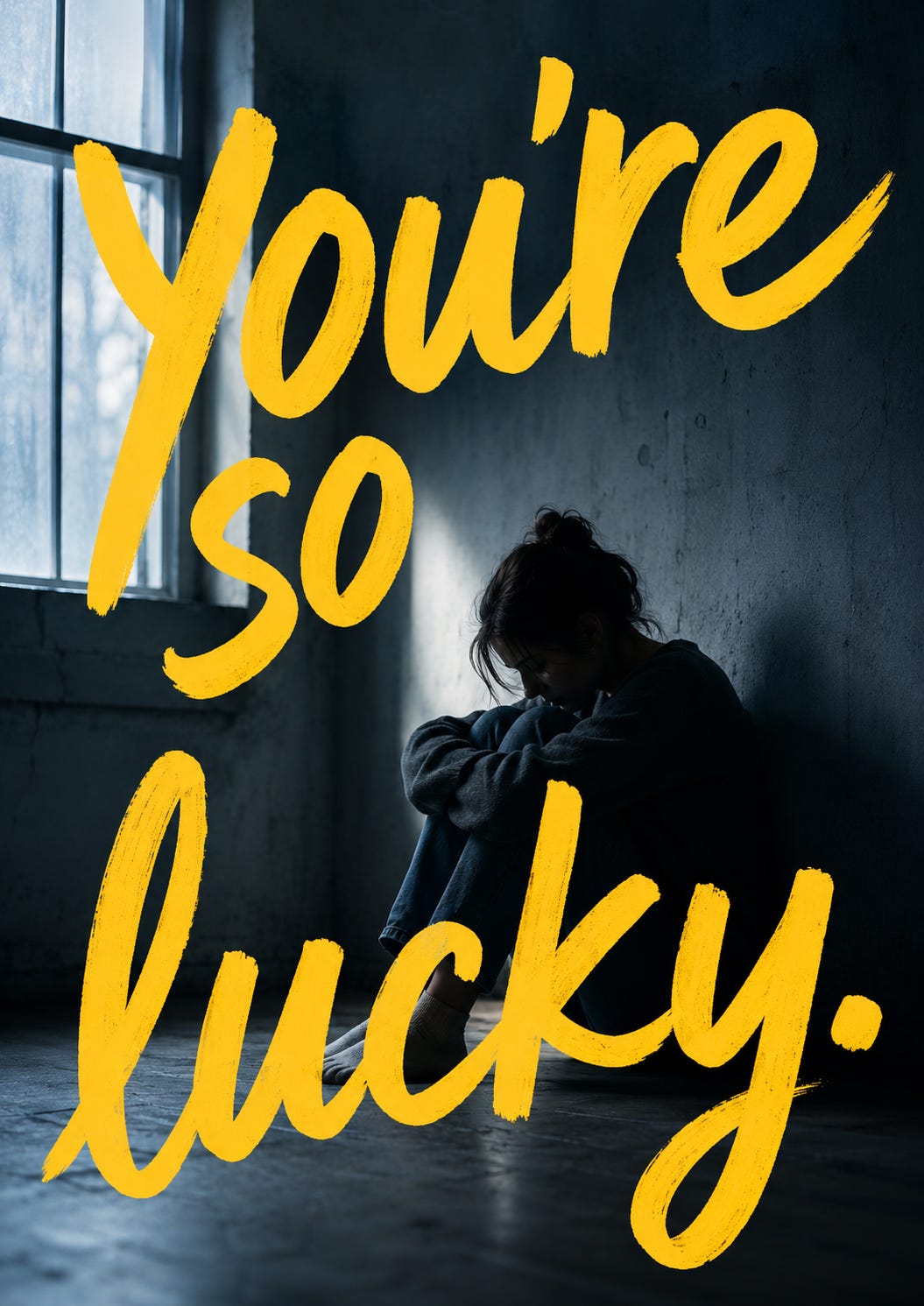
“You’re so lucky. Look on the bright side. It could have been so much worse. Everything happens for a reason. One door closes, another one opens.”
The words change, but you know the moment. You’re in the worst stretch of your life, and someone leans in with a word of hope. And every part of you wants to tell them to go f**k themselves. Then it gets worse. Because on top of the rage comes the guilt. Because you know they’re not wrong.
Logically, I know I was lucky. It could have been so much worse. I also know the future might turn out good. But I haven’t caught up to the change, and right now I’m terrified of what it will look like. I’m suffering.
Why am I not feeling lucky? Why am I so angry?
Because knowing something and feeling it are not the same thing. They don’t move on the same timeline.
The mind can accept something long before the heart catches up.
My mind could do the math on how fortunate I was. I was lucky that I didn’t catch the flight the day before. I was lucky that my daughter heard me when I mumbled for help. The list goes on. But my heart was not there yet. I was grieving, feeling like the most unlucky man alive.
I’d lost who I was, and I couldn’t picture my future, or who I’d become. So much had changed in that single split second. They were asking me to see the hope while I was still in a dark hole. To skip the pain, to not be afraid, to go straight to the lesson. To brush the dust off and jump back up again. It feels like spiritual bypassing.
They’re not really saying it to you. They’re saying it to themselves. They feel lucky you’re still here, and the hope they keep reflecting back at you is their hope, the thing they need to believe to keep standing. They say it because they love you. Because watching someone you love suffer is another level of helplessness.
The clumsy phrase is often love that doesn’t know where to put itself.
That didn't make it land any softer in the moment. But it changed how I heard it.
I picture it like this: Gratitude lives in the brain, grief is in the heart, and there is a bridge between them that I can’t see or control. The mind knows the way over. The heart just needs time to be ready to let it cross.
It took me a while to understand that I can’t force it. I just have to hold the knowing and let it slowly pull me forward. The feeling arrives on its own, when I’m not bracing for it, and it surprised me when it did.
The day I left the hospital bubble and saw traffic for the first time in weeks, I cried. Not from sadness, but from overwhelming gratitude for eighteen-wheelers and gas stations and people going about their ordinary lives. I was given a rare gift: the chance to see the miraculous in the mundane again. (From my book Beyond 100%)
Someone once told me you can’t be resentful and grateful at the same time. I’m not sure if that’s true, but I want to believe it, because it means there’s something I can actually do about it.
Almost two years later, I still don’t know the reason or what’s behind the door. I’m still figuring it out. Still asking the questions. I might never have all the answers.
But I don’t need all the answers to believe it might be true. It’s like what my grandmother told me once: “Sometimes the question itself is more important than its answer.” So I’m learning to live inside the question instead of waiting for the answer.
Tools that helped me bridge the gap
These aren’t quick fixes. They’re what helped me sit in the space between knowing and feeling without drowning in guilt.
Hear the love underneath the words. When someone tells you how lucky you are, hear “I love you. I’m the lucky one.” Often they’re scared, and grateful you’re still here, and out of better words. You can receive the love without having to agree with the timing.
Be grateful, even if you have to force it. This is a hard one, and a cliché, but like all clichés, it’s also true. Find one tiny thing to be grateful for. Anything. The smell of coffee, your dog happy to see you. It’s okay if your heart isn’t in it yet. Name it, and let your mind lead your heart there.
Protect the grief, too. Be honest: this shit happened to you. And it’s okay. No, it’s more than okay, you HAVE to give yourself permission to grieve without apologizing. The grief is part of recovery, not a failure of it.
You don’t have to choose between knowing how lucky you are and grieving what you lost. You’re allowed to hold both. If you’re still angry at people who aren’t even wrong, you’re not ungrateful. You’re just not there yet. Your heart will catch up to your mind on its own time, and gratitude, when it comes, will probably surprise you the way it surprised me.
For now, that’s enough. The knowing is enough. Let it sink into your heart at its own rhythm.
I’d love to hear from you: What’s something people keep telling you that’s true, but that you’re not ready to feel yet? Or has gratitude ever surprised you, arriving when you least expected it?
If you’re sitting in that gap right now, angry and grateful and guilty all at once, know that you’re not doing it wrong. You’re just human, and you’re early. That’s okay.
If this resonated, you might find something in The Shift from “Why Me?” to “What Now?” and The Practice of Letting Everything Pass. You can also learn more about my work and the book at nir-peled.com.
About the author: Nir Peled is a seven-time survivor, certified yoga instructor, and meditation teacher. His upcoming book, Beyond 100%: Rebuilding Life After It Breaks, offers a Body-Mind-Spirit framework for anyone navigating forced reinvention after a life-shattering event. Learn more at nir-peled.com.